Important Update: Touch support restored for interactive simulations

Full touch support for modern smartboards and Windows touchscreen devices has been restored to all interactive simulations on this website.

The issue was revealed when some users recently reported that draggable elements in the simulations were not responding to touch input on newer interactive whiteboards (including Promethean boards) and Windows touch-enabled devices. This significantly impacted the classroom experience for teachers and students using these technologies.

After extensive testing and development, the underlying CreateJS framework has been successfully updated to support modern pointer events. The simulations now properly handle touch input across all contemporary touch-enabled devices while maintaining backward compatibility with traditional mouse input.

What This Means for You:

  • All interactive simulations now work seamlessly on modern smartboards
  • Full touch support on Windows touchscreen devices
  • No action required on your end – the updates are already live
  • Existing functionality on other devices remains unchanged

If touch interaction issues were previously experienced, the simulations can be tried again. They should now work as intended on your devices.

As always, if any issues are encountered or questions arise, please don’t hesitate to reach out.

Update

Similar Posts

  • | |

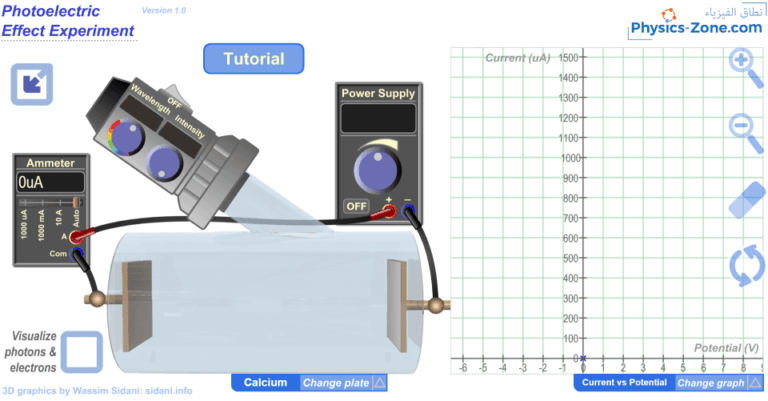
    Photoelectric Effect Experiment Simulation

    With this comprehensive and realistic-like photoelectric effect experiment simulation, you will be able to illustrate the following:
    The variations of the photocurrent versus potential.
    The variations of the photocurrent versus light intensity.
    The variation of the kinetic energy of the ejected electrons versus the incident light frequency.
    It comes with a graph where you can trace each type of variation as you vary the parameters of the experiment.
    Plus, you can experiment and discover more with this simulation.

  • |

    Newton’s first law demonstration

    Newton’s first law states that when net force is zero, objects at rest remain at rest and objects in motion continue at constant velocity. This experiment uses an air cushion scooter to eliminate friction, demonstrating that with zero net force (weight balanced by track reaction), the scooter remains stationary when at rest and continues moving at constant speed when given an initial push, until an external force stops it.

  • التفكير خارج الصندوق وضوابطه

    التفكير خارج الصندوق هو التفكير الإبداعي من منظور جديد، لكنه يحتاج إلى ضوابط ليكون بنّاء. يستعرض المقال أمثلة على التفكير الإبداعي الناجح من نيوتن وأينشتاين وماكس بلانك، ويناقش أهمية تعليم الشباب التفكير النقدي بدلاً من التلقين، مع تحذير من التفكير الذي يخرق هذه الضوابط الأساسية.

  • |

    Newton’s third law

    Newton’s third law demonstrates that for every action, there is an equal and opposite reaction. This video uses a Jackie Chan movie scene to illustrate the principle: when Jackie pushes his partner (action force), he experiences an equal push back (reaction force), allowing both to escape danger. A creative real-world example of action-reaction force pairs.

  • العقل السليم ≠ Common Sense

    في الكتب العلمية المترجمة إلى العربية، تُترجم عبارة “common sense” خطأً إلى “العقل السليم” أو “المنطق السليم”، مما ينشئ تناقضاً منطقياً خطيراً. فالمصطلح الإنكليزي يشير إلى الحدس اليومي والتصورات البديهية، بينما “العقل السليم” بالعربية يعني الاستدلال المنطقي الصارم. عندما نقرأ أن ميكانيك الكم “يناقض العقل السليم”، يبدو وكأن الفيزياء الحديثة تتعارض مع المنطق ذاته، بينما الحقيقة أنها تتعارض فقط مع حدسنا المبني على خبرتنا اليومية. هذه المغالطة الترجمية قوّضت صورة الفيزياء في الثقافة العربية وأضعفت الثقة بالعلم الحديث.

  • |

    Newton’s second law

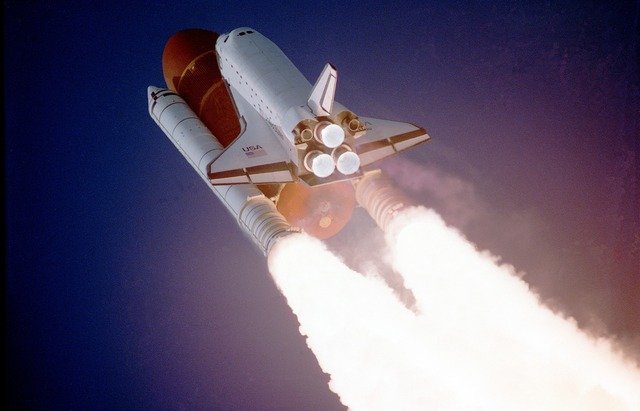
    Newton’s second law states that net force and acceleration are directly proportional, with mass as the constant of proportionality (F=ma). This experiment uses an anvil supported by air pressure to demonstrate that even when weight is counteracted, the anvil’s huge mass still requires enormous force to accelerate it from rest. A powerful illustration of the relationship between force, mass, and acceleration.

Leave a Reply

Your email address will not be published. Required fields are marked *