|

القصور الذاتي


To read the English version click here.

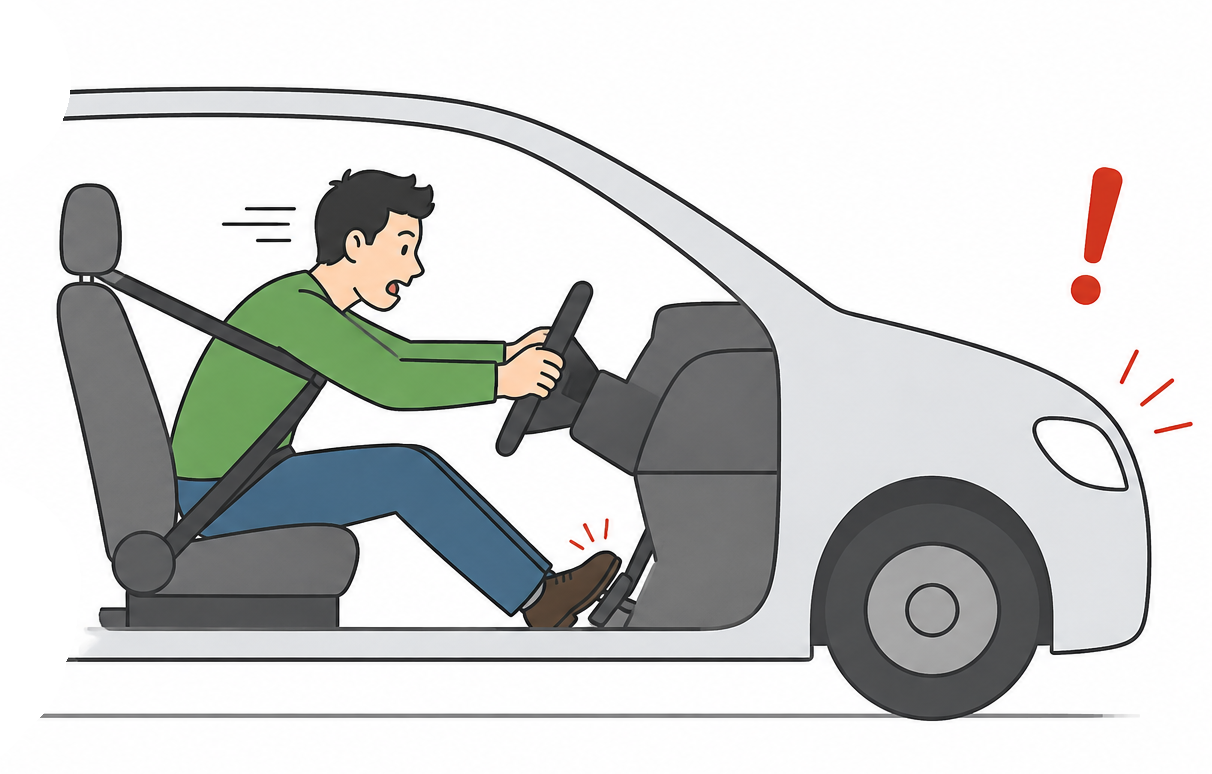
هل لاحظت أن جسمك يميل للأمام عندما تكبح السيارة؟ أو أنه يميل للخلف عندما تقلع السيارة؟ ذلك لأنك تعاني من خاصية في جسمك تسمى “القصور الذاتي”. كلما زادت كتلة جسمك، كلما ازداد ذلك التأثير.

يُعرّف القصور الذاتي على أنه مقاومة الجسم لأي تغيير في متجه سرعته. وهذا يشمل تغييرات في مقدار سرعة الجسم أو اتجاه حركته.

Similar Posts

  • |

    قانون نيوتن الثاني

    ينص قانون نيوتن الثاني على أن القوة الصافية والتسارع متناسبان طردياً، وثابت التناسب هو الكتلة (القوة = الكتلة × التسارع). تستخدم هذه التجربة سنداناً مدعوماً بضغط الهواء لإظهار أنه حتى عندما يتم مقاومة الوزن، فإن الكتلة الضخمة للسندان لا تزال تتطلب قوة هائلة لتسريعه من السكون. توضيح قوي للعلاقة بين القوة والكتلة والتسارع.

  • Simply motivating

    I conducted countless experiments in class throughout the course of my many years of teaching physics to motivate the students. However, I had never anticipated to find that nothing delighted the students as much as the simplest activity where I or the students made a light bulb light up by connecting a switch, wires and a battery.

  • |

    Course: Crafting Effective Learning Objectives

    I created this course and published it on my Moodle platform. Each module is a SCORM package, with a course evaluation survey at the end and an unofficial completion certificate as a template that can be costumed to the specifications of your organization. The course is tracked, and you must successfully complete each chapter to unlock the next one. The course is fully learner-centered.

  • |

    Verifying Newton’s second law

    This zero-gravity experiment aboard a space shuttle demonstrates Newton’s second law. With no gravitational force, an astronaut applies the same force to balls of different masses. The lighter ball accelerates more than the heavier one, proving the inverse relationship between mass and acceleration when force is constant (F=ma). A perfect demonstration of fundamental physics principles in microgravity conditions.

  • |

    Torque

    This demonstration explains torque (moment of force) and rotational equilibrium. A force can create a turning effect that depends on both the force magnitude and the perpendicular distance from the pivot point. At equilibrium, clockwise moments equal counterclockwise moments. The post includes formulas for calculating torque with perpendicular and angled forces.

Leave a Reply

Your email address will not be published. Required fields are marked *