Quick update for iOS users
Quick update for iOS users: all Physics Zone simulations now run smoothly on iPhones, iPads, and Macs after fixing the full-screen toggle issue.

Quick update for iOS users: all Physics Zone simulations now run smoothly on iPhones, iPads, and Macs after fixing the full-screen toggle issue.
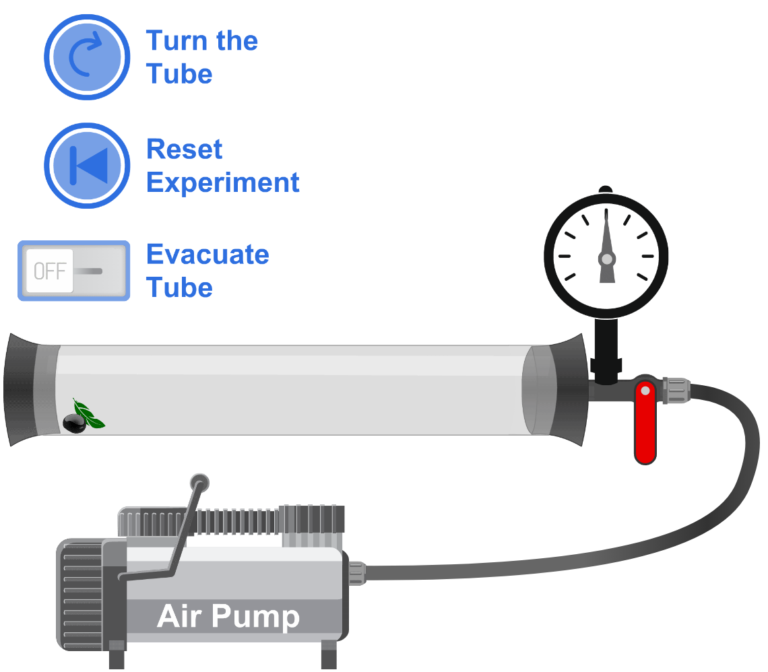
This simulation models Newton’s tube experiment, showing how air resistance affects falling objects. By removing air from the tube and flipping it, users can observe how a feather and a pebble fall differently in air but identically in a vacuum—demonstrating that gravity accelerates all objects equally when air resistance is removed.
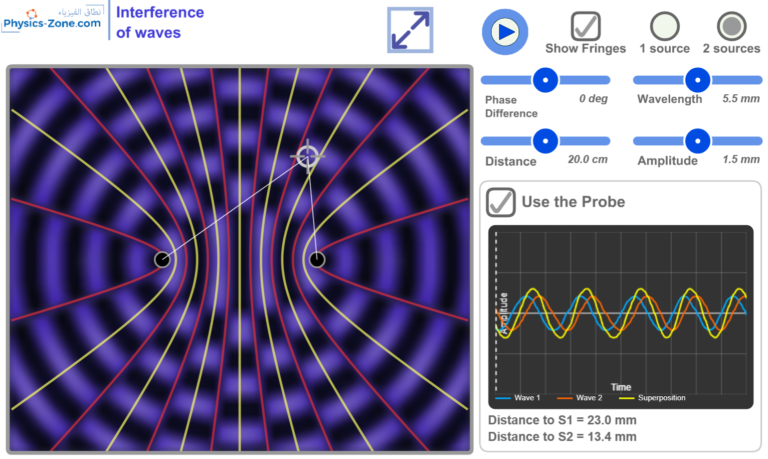
This interactive wave interference simulation demonstrates the fundamental principles of wave superposition using two sources. Users can adjust key parameters including wavelength, amplitude, phase difference, and source separation to observe how waves interact and produce complex interference patterns. The simulation features a real-time probe tool that displays individual wave amplitudes and their resultant superposition, showing constructive and destructive interference at different points in the field. The visual representation includes radiating wave fronts from both sources, with characteristic alternating bands of high and low amplitude clearly visible throughout the interference pattern.
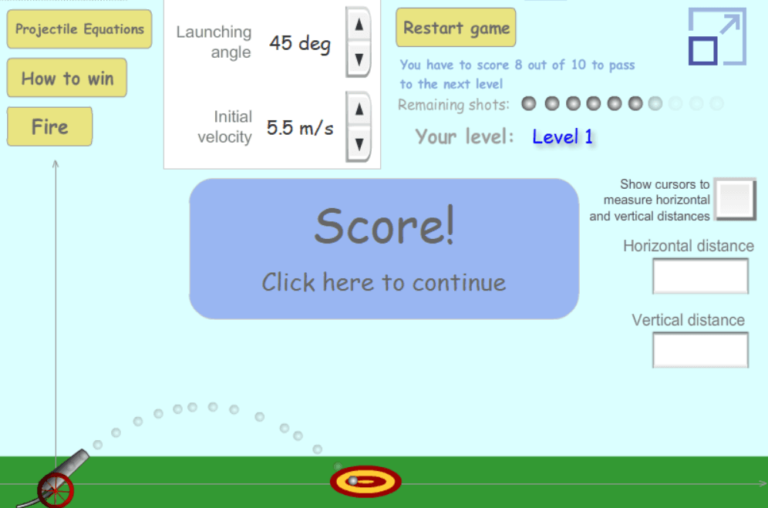
In this game, you must employ the projectile equations to win.
The game consists of three levels, each of which must be completed by scoring at least 8 out of a possible 10 tries. In the first level, you must hit a ground target that shifts position after each attempt. In the second level, you will need to alter the ball’s trajectory to pass over a wall. In the third level, the target flies and changes position both horizontally and vertically in each trial.
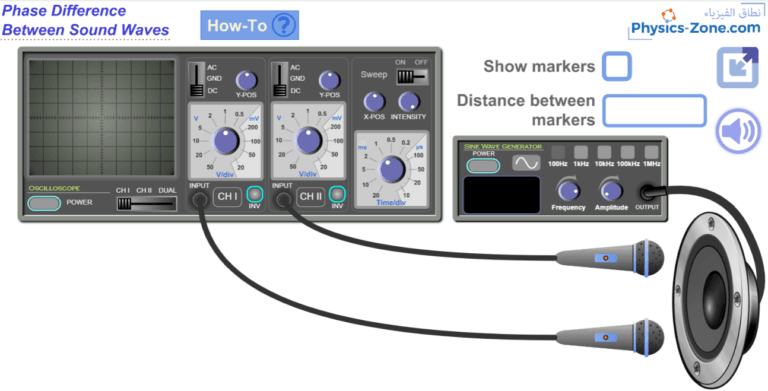
With this rich simulation, you can visualize and measure the phase difference between two sound waves using two microphones connected to an oscilloscope. Moreover, you can determine the speed of sound in air by measuring the distance between the two microphones when their waveforms are in phase, taking into account the frequency of the sound wave that is controlled by the sine wave generator.
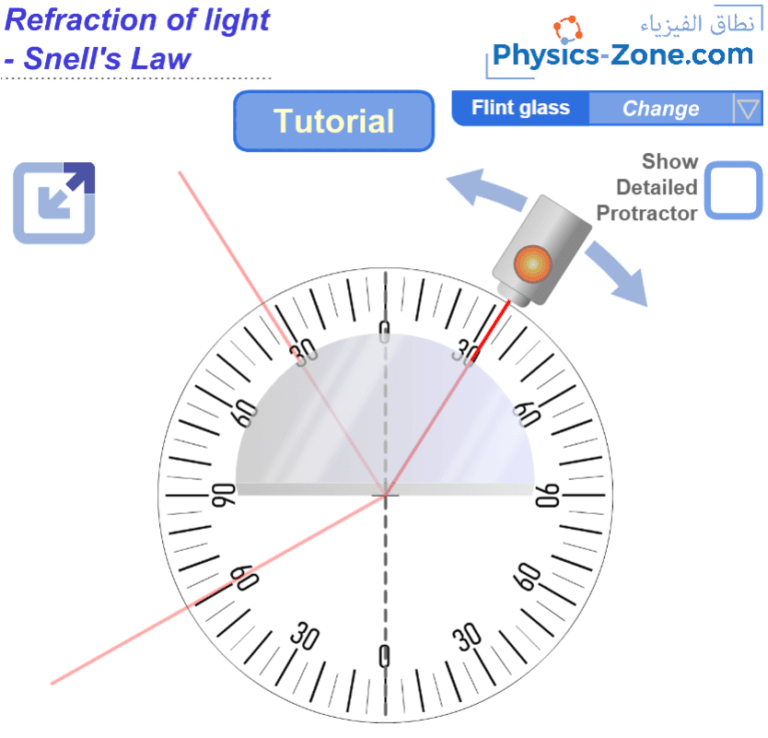
With this simulation, you can experiment the refraction of light between air and a transparent semi-disk. You can choose the material of the disk from a list of materials. Also, you can determine the index of refraction of the semi-disk when you apply Snell’s law to measurements you take in the simulation.
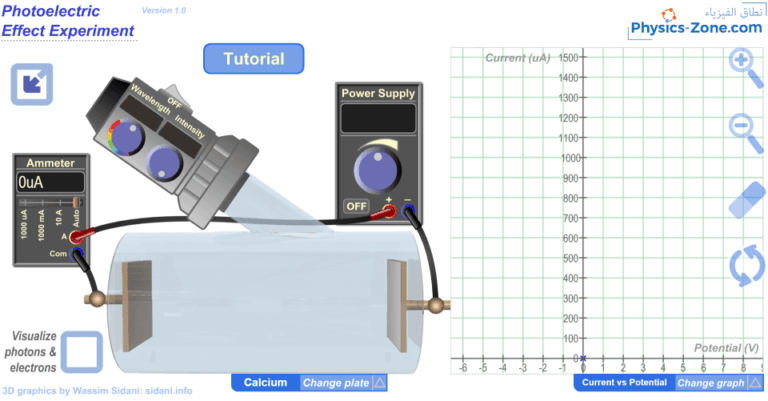
With this comprehensive and realistic-like photoelectric effect experiment simulation, you will be able to illustrate the following:
The variations of the photocurrent versus potential.
The variations of the photocurrent versus light intensity.
The variation of the kinetic energy of the ejected electrons versus the incident light frequency.
It comes with a graph where you can trace each type of variation as you vary the parameters of the experiment.
Plus, you can experiment and discover more with this simulation.
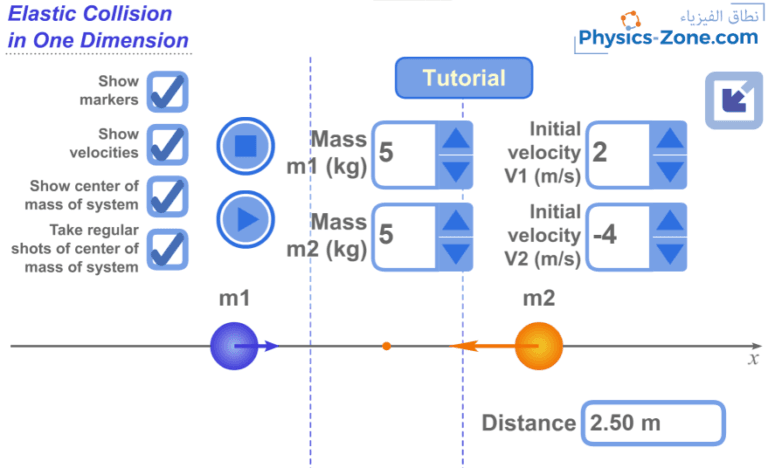
Using this simulation, you can demonstrate the conservation laws in a one-dimensional elastic collision (The law of conservation of linear momentum and the law of conservation of kinetic energy).
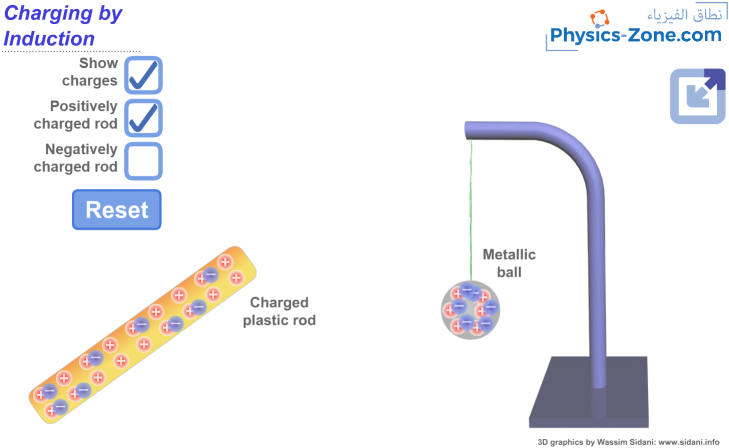
Using this simulation, you can experience the phenomenon of charging a metallic ball by induction in the first stage and charging the ball by contact in the second stage after the charged rod touches the ball. The displayed charges are for an illustrational purpose, and they are not seen in reality. You can disable the display of charges on the rod and on the ball.
In this simulation, you can try two situations, one in which the rod is positively charged and another in which the rod is negatively charged, and you will see that the two situations result in the same observation.
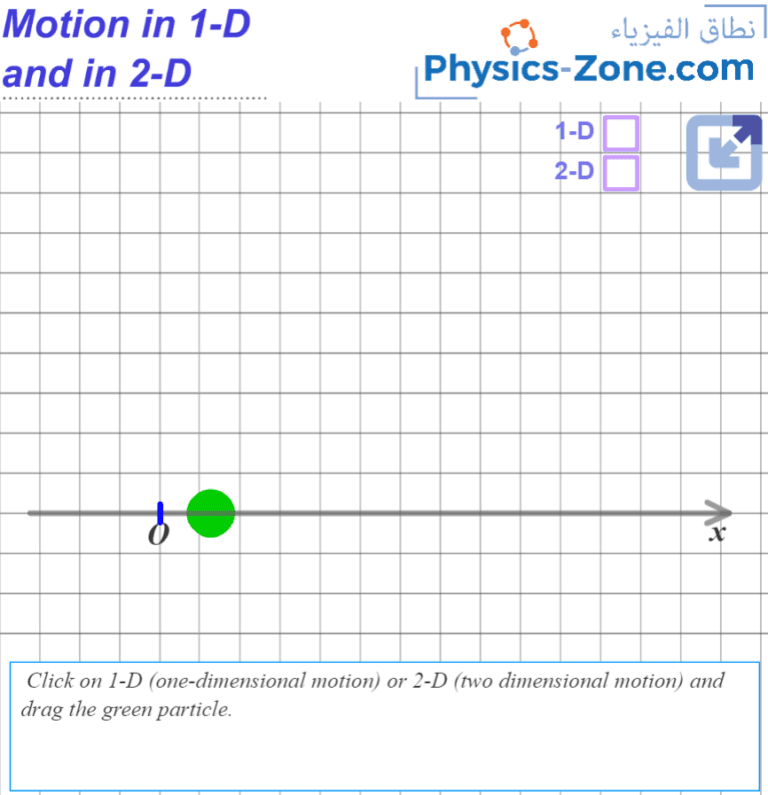
This is a simple simulation that shows the difference between one-dimensional motion, that can be described by means of one axis, the x-axis, and the two-dimensional motion, that needs an additional axis, the y-axis to be described.