One-Dimensional Elastic Collision Simulation
Using this simulation, you can demonstrate the conservation laws in a one-dimensional elastic collision (The law of conservation of linear momentum and the law of conservation of kinetic energy).
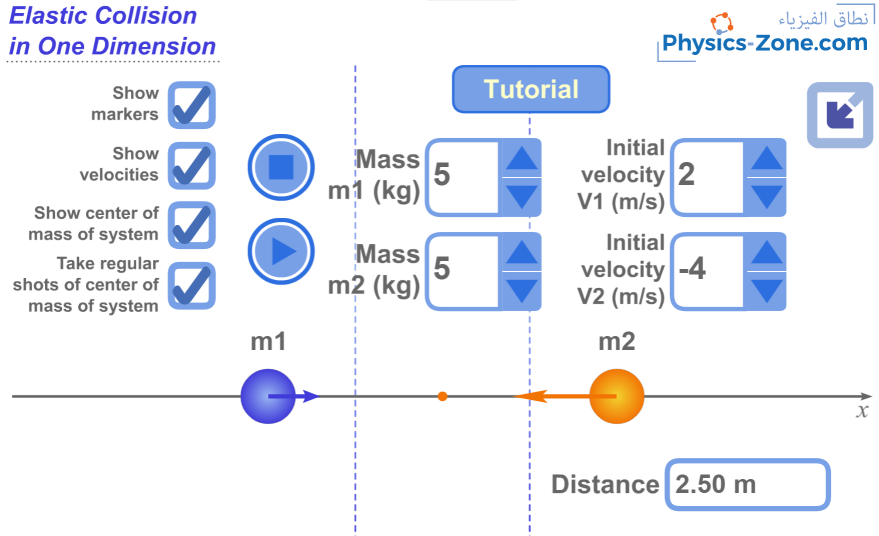
Using this simulation, you can demonstrate the conservation laws in a one-dimensional elastic collision (The law of conservation of linear momentum and the law of conservation of kinetic energy).

This zero-gravity experiment aboard a space shuttle demonstrates Newton’s second law. With no gravitational force, an astronaut applies the same force to balls of different masses. The lighter ball accelerates more than the heavier one, proving the inverse relationship between mass and acceleration when force is constant (F=ma). A perfect demonstration of fundamental physics principles in microgravity conditions.

ينص قانون نيوتن الثاني على أن القوة الصافية والتسارع متناسبان طردياً، وثابت التناسب هو الكتلة (القوة = الكتلة × التسارع). تستخدم هذه التجربة سنداناً مدعوماً بضغط الهواء لإظهار أنه حتى عندما يتم مقاومة الوزن، فإن الكتلة الضخمة للسندان لا تزال تتطلب قوة هائلة لتسريعه من السكون. توضيح قوي للعلاقة بين القوة والكتلة والتسارع.
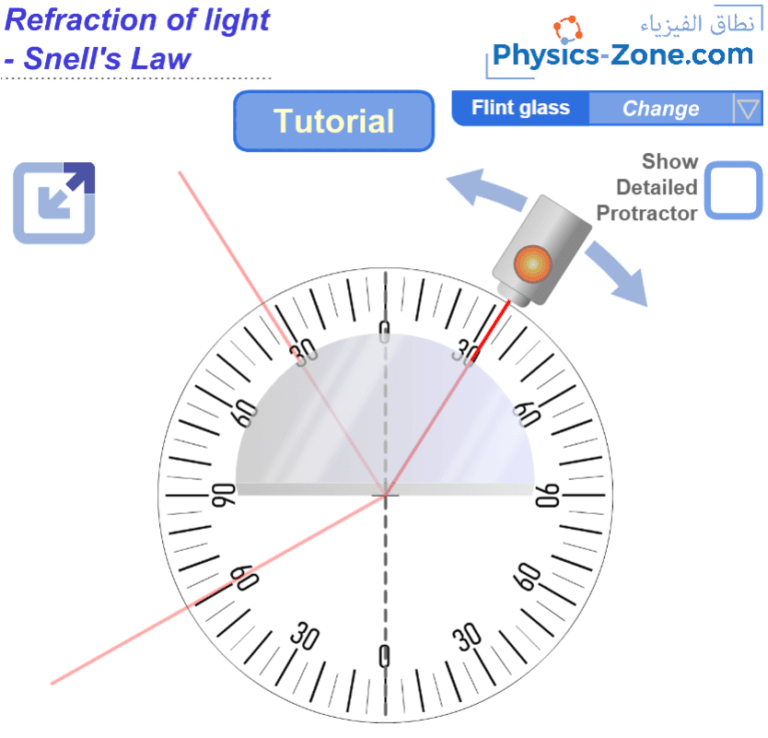
With this simulation, you can experiment the refraction of light between air and a transparent semi-disk. You can choose the material of the disk from a list of materials. Also, you can determine the index of refraction of the semi-disk when you apply Snell’s law to measurements you take in the simulation.

This demonstration explains torque (moment of force) and rotational equilibrium. A force can create a turning effect that depends on both the force magnitude and the perpendicular distance from the pivot point. At equilibrium, clockwise moments equal counterclockwise moments. The post includes formulas for calculating torque with perpendicular and angled forces.

This story always reminds me how much work we still have to do to bridge the gap in technological literacy among educators!
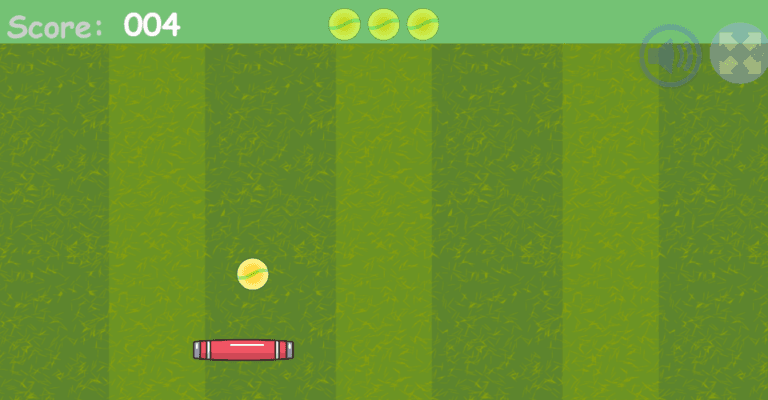
A gamified twist on classic Pong! Answer quiz questions correctly to recover lost balls. Teachers can customize questions for any subject. Built with CreateJS – play it free in your browser.