DeepSeek AI: The tool I wished I had while building my photoelectric effect simulation

When I developed my photoelectric effect simulation, I spent three months working hard to develop an interactive experience that accurately represents this fundamental quantum phenomenon. The biggest challenge was modeling the relation between the photo-current and the cathode potential factoring the saturation current phenomenon into consideration. This was a complexity that goes beyond the standard equations taught in high school or undergraduate physics courses.
During development, I used ChatGPT to assist with the technical research. When I asked it for the equations that model current-voltage relationships in the photoelectric effect, ChatGPT could only provide basic undergraduate-level equations, not the complexity I needed. This led me to conduct research, analyzing experimental data to derive empirical formulas that could represent the phenomenon. I gathered data for different cathode substances and used graphing applications to extrapolate the curve of the current-voltage relation. Then I performed curve fitting to derive an empirical equation that governs this relation. I acknowledge that there must be a theoretical equation somewhere, but I was not able to reach it since I did not have the time to research scientific papers on the photoelectric effect.
Looking back, I wish I had access to tools like DeepSeek during my development process. In my recent experimenting with this open-source AI model, I’ve found it provides structured, research-paper-like responses with meaningful technical information from the first interaction. This would have significantly streamlined my research phase. Definitely, DeepSeek wouldn’t have appeared if ChatGPT hadn’t existed in the first place. However, the super capabilities that DeepSeek came with as it came into existence, plus being open-source, makes it super competitor to the existing AI tools.
The emergence of open-source AI projects like DeepSeek represent an exciting opportunity for educational technology development. As these tools continue to grow through contributions from diverse scientific communities, they could make the development of educational simulations richer, more efficient, and accessible. While I had to spend considerable time patching together empirical formulas from experimental data, future developers might be able to access this specialized knowledge more easily, allowing them to focus more on developing innovative, interactive learning experiences.
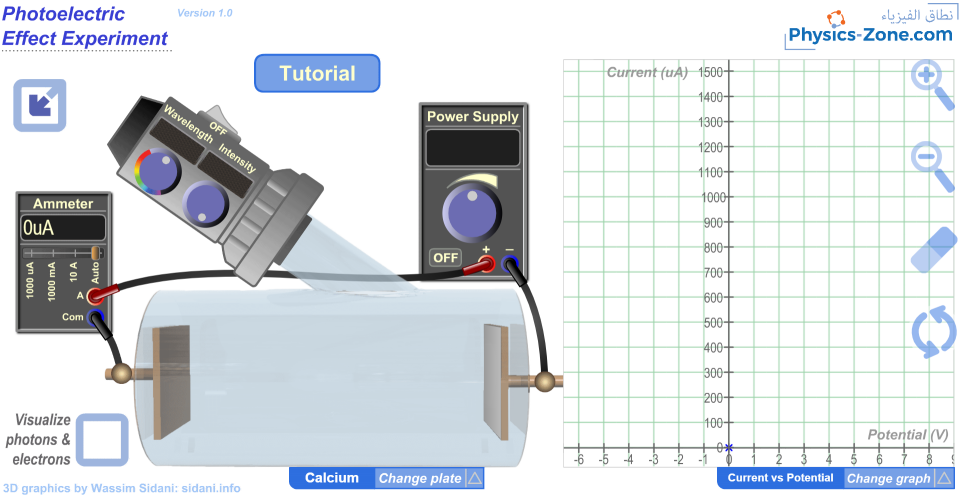
Photoelectric effect simulation

Similar Posts

  • | | |

    Projectile Game

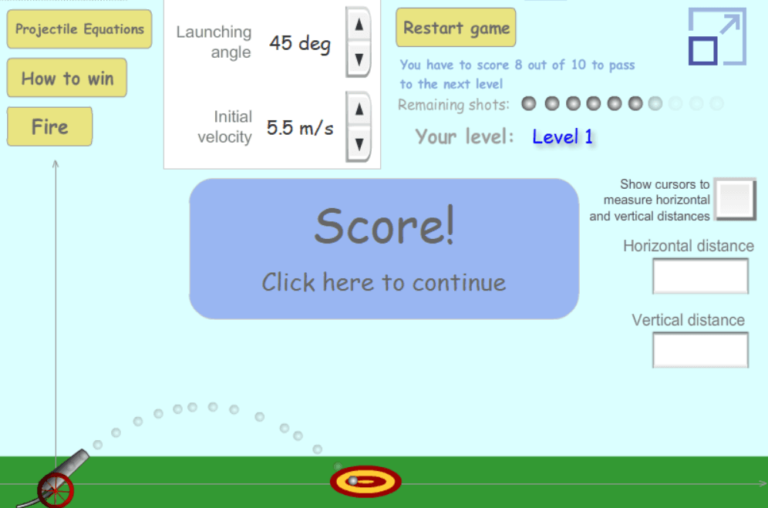
    In this game, you must employ the projectile equations to win.
    The game consists of three levels, each of which must be completed by scoring at least 8 out of a possible 10 tries. In the first level, you must hit a ground target that shifts position after each attempt. In the second level, you will need to alter the ball’s trajectory to pass over a wall. In the third level, the target flies and changes position both horizontally and vertically in each trial.

  • | |

    Long Division Simulation – Remainder

    If you or your student or child are having difficulties in learning long division, then you will find this simulation comprehensive and instructional, that guides the learner through the process step by step. This application is for long division with remainder. Another application on long division with float quotient is also available in the simulations section.

  • |

    Conservation of linear momentum

    This demonstration explains conservation of linear momentum through cannon recoil. When a cannon fires a bullet, it recoils backward with much lower velocity due to its greater mass, illustrating the inverse relationship between mass and velocity. The post provides complete mathematical derivations showing that total momentum remains constant in an isolated system where net external force is zero.

  • Simplicity is power

    In creating interactive educational tools, simplicity is power. A minimalist design doesn’t just look clean; it helps learners focus on what truly matters. Instead of overwhelming the user with unnecessary details, focus on providing a clear, interactive interface that mirrors the real-world experience.

  • |

    Free fall experiment

    This experiment demonstrates that in the absence of air resistance, two freely falling bodies released from the same height reach the ground simultaneously. Both objects gain the same speed during their fall, proving they experience the same acceleration – the acceleration due to gravity. The demonstration explains why we typically observe heavy objects falling faster than light objects due to air resistance effects.

  • | |

    Long Division Simulation – Float

    If you or your student or child are having difficulties in learning long division, then you will find this simulation comprehensive and instructional, that guides the learner through the process step by step. This application is for long division with float quotient. Another application on long division with remainder is also available in the simulations section.

Leave a Reply

Your email address will not be published. Required fields are marked *